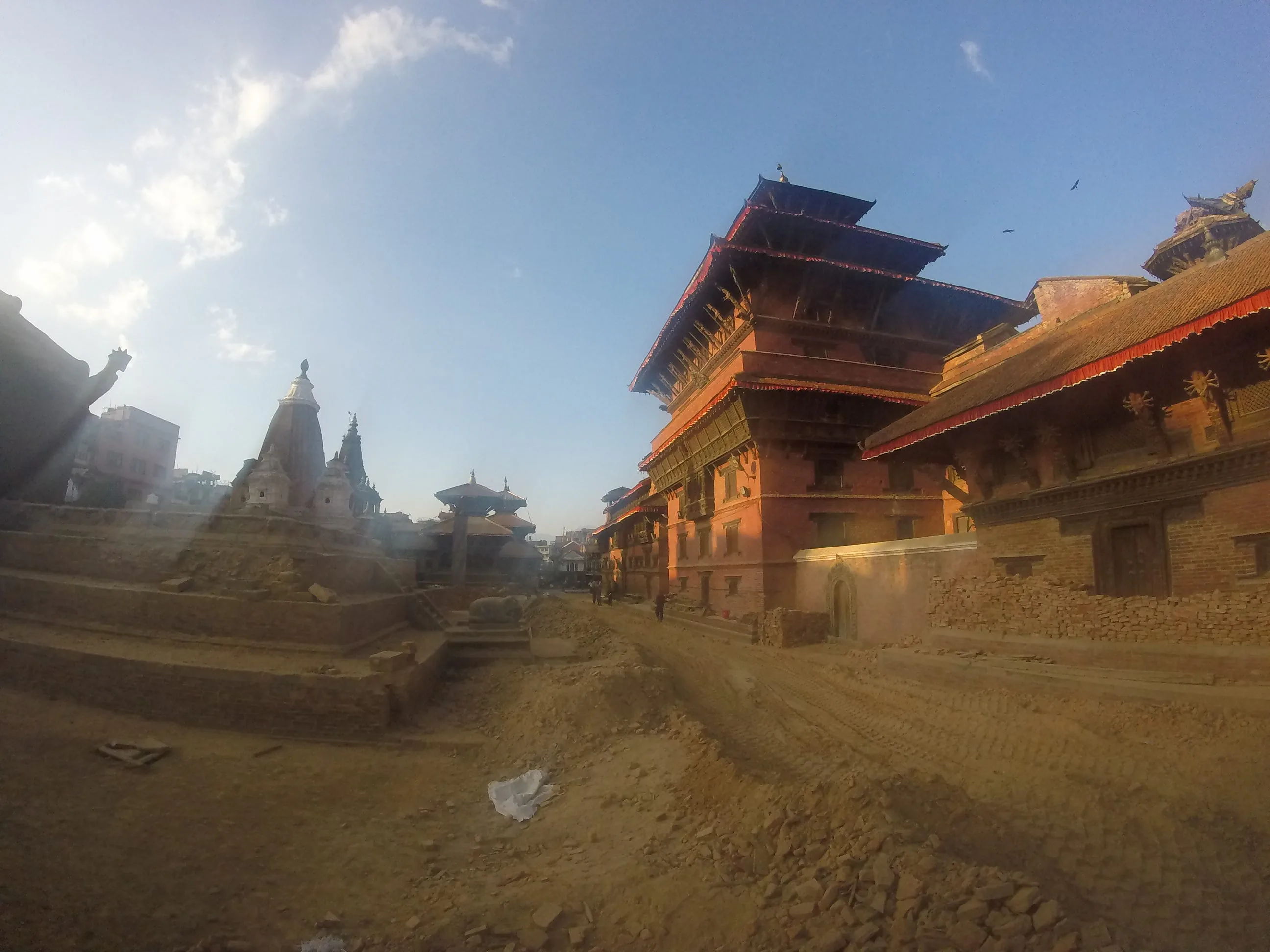
#NepalQuake Story: A master Handicraftsman, Gopi Lal Sunar
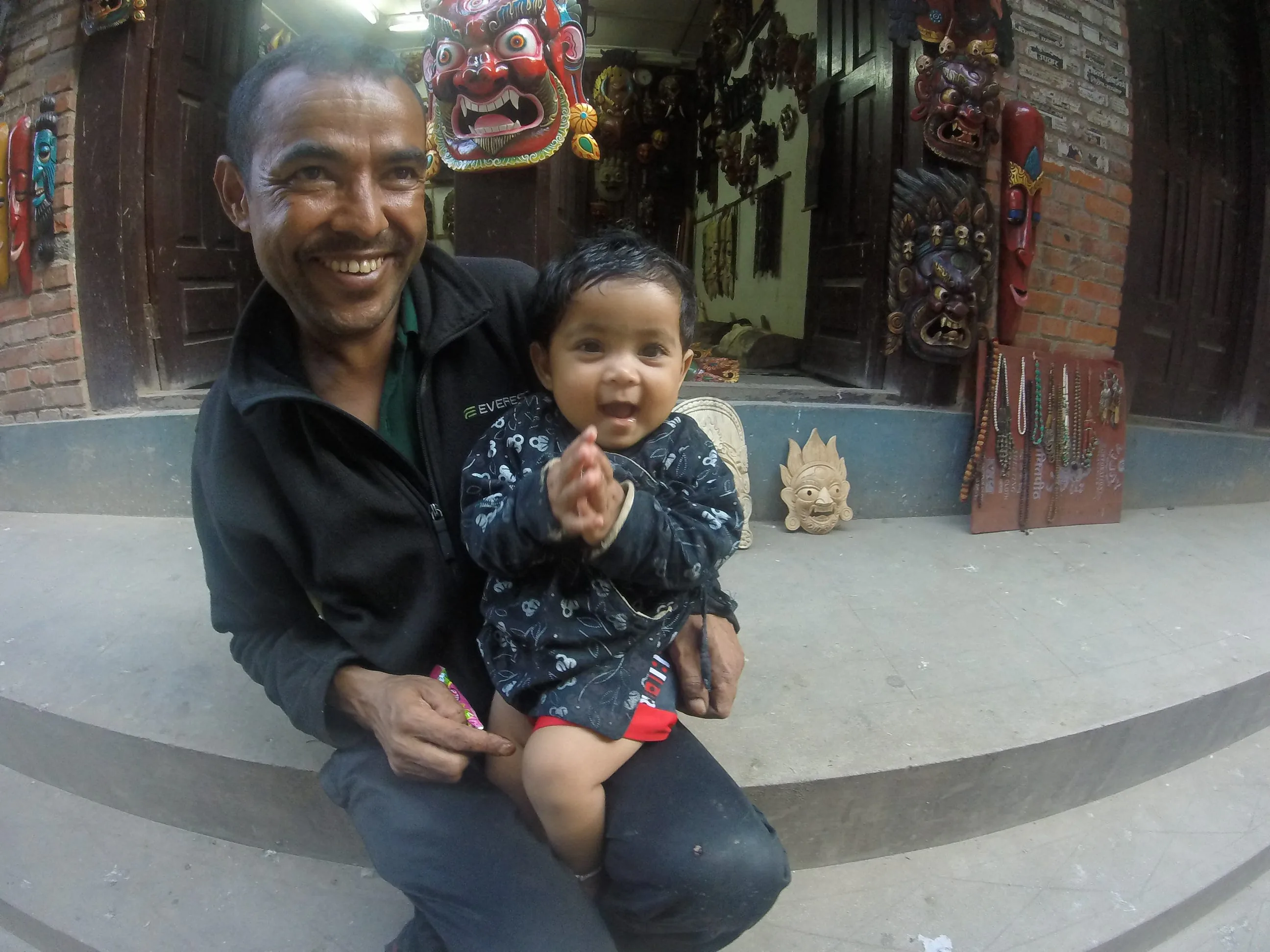
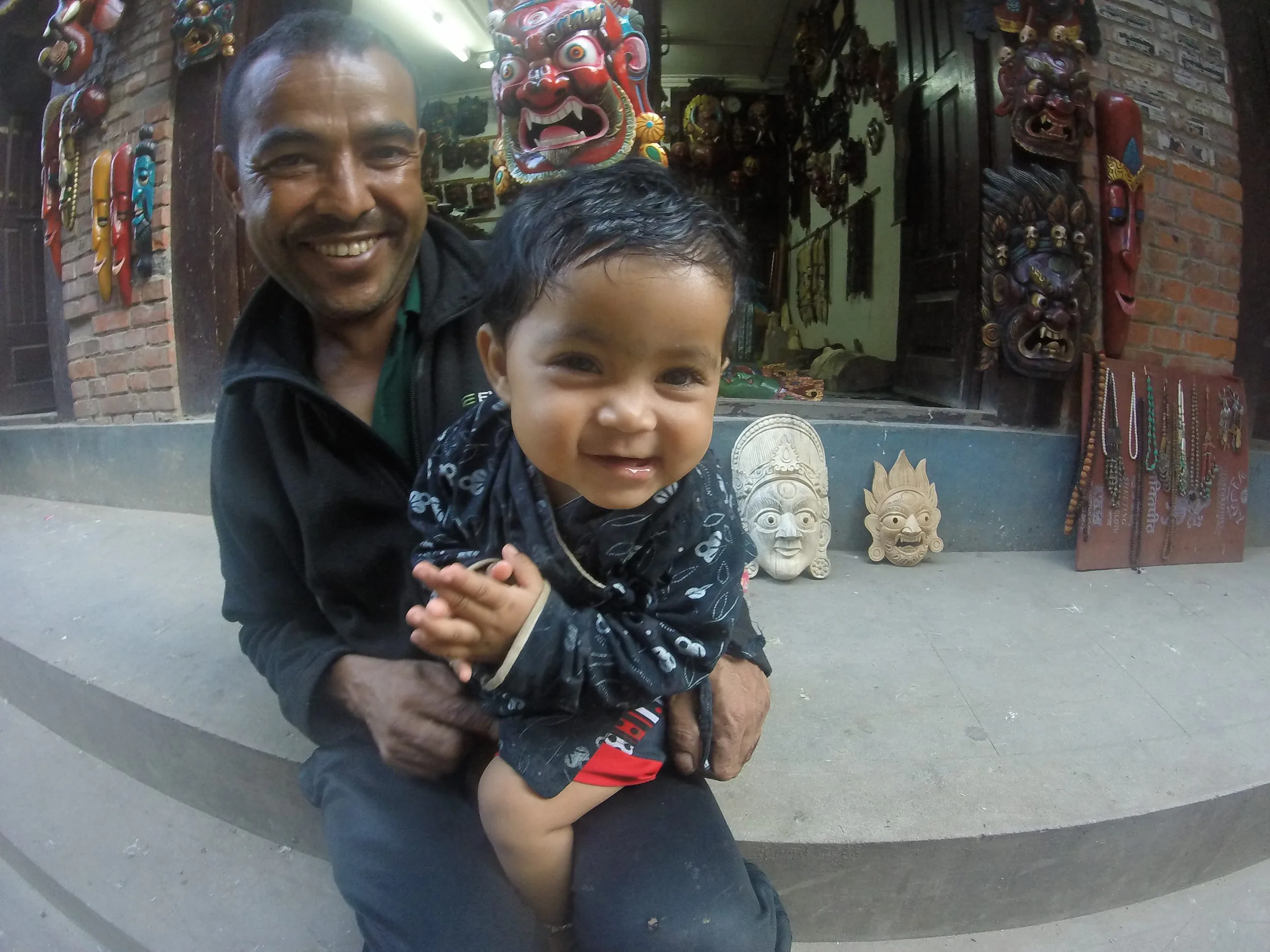
The adorable baby joined his hands to say “Namaste.” I stopped to say hello, and we talked for more than 30 minutes.
I met Gopi while walking through the Patan Durbar Square, an old town on the outskirts of Kathmandu. Patan is beautiful. It’s an old town, known almost exclusively for it’s history.
While walking through Patan, I saw Gopi was sitting outside his handicrafts store with his grandson, Angel Magar.
Gopi Lal Sunar (45) is from Attarpur village in Sindupalchowk District. It’s the district I first visited with AP reporter, Todd Pitman, where several villages were flattened by an aftershock. Then, 3 times since then via helicopter on earthquake relief missions with JRM Foundation.
Gopi lives in Patan with his wife, and supports his family with his earnings from the handcrafts shop. He even sends money back to his parents in Attarpur.
Fortunately, the earthquake spared his house and shop in Patan. However, his parents in the village weren’t so lucky.
Gopi’s father (Santa Bahadur Sunar) and mother (Mangali Sunar) still live in the village, up in the gorgeous hills of Sindupalchowk District, but their house is now completely destroyed.
The M7.8 earthquake’s epicenter was 100 kms away and caused some serious damage to his parents’ home, but the following day’s M6.7 aftershock knocked down whatever remained.
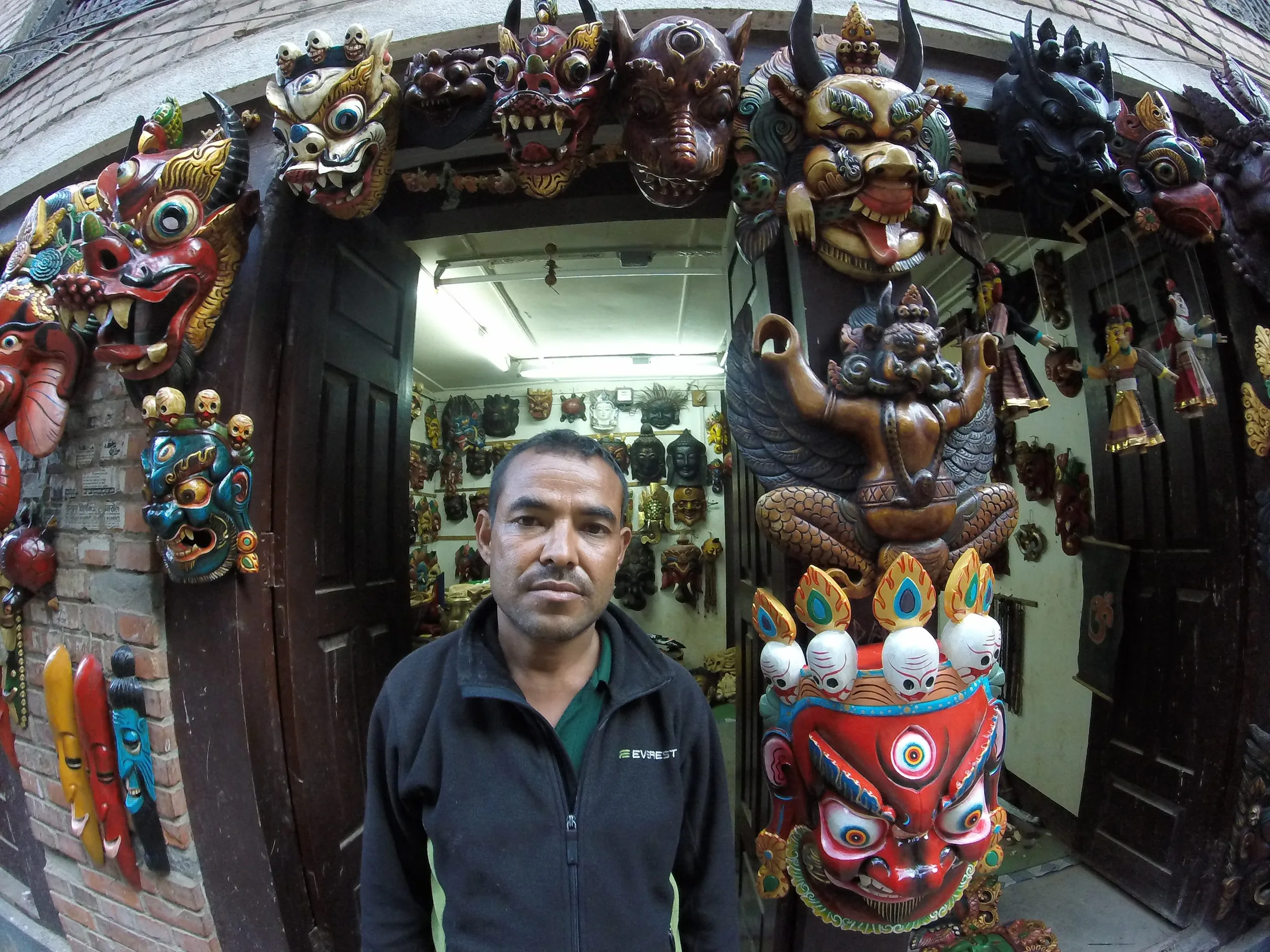
Before the earthquake, Gopi spent his days creating beautiful dragon masks and other handicrafts and selling them at his shop, along a busy street in Patan.
But since the earthquake, he sounds disheartened.
“Tourists won’t come here anymore. We don’t have any temples left. What will I do with my business?” he asked.
“Handicrafts are not a necessity — it’s not like food or shelter. There’s no demand for this in Nepal. How am I going to support my family now?”
I asked him whether he’s received any aid from the government, and he said “India and Modi have sent so much aid, but none of that has been shared with us yet.”
I had walked around Patan for more than an hour, and never seen it quite like this. The shops were all closed, except for a handful that got lucky.
The vast majority of buildings in Patan are standing, but not for much longer.
A once stunning historic city sits ruined. The words “ancient city of Patan” rang through my mind as I walked through the heart of the Patan Durbar Square.
Is this the end of Patan?
I’m not a fan of hyperbole, but this is the end of Patan as we know it.
The bricks from the temples sit in neatly arranged piles. The Durbar Square is dusty. Our centuries-old historic monuments turned to dust.
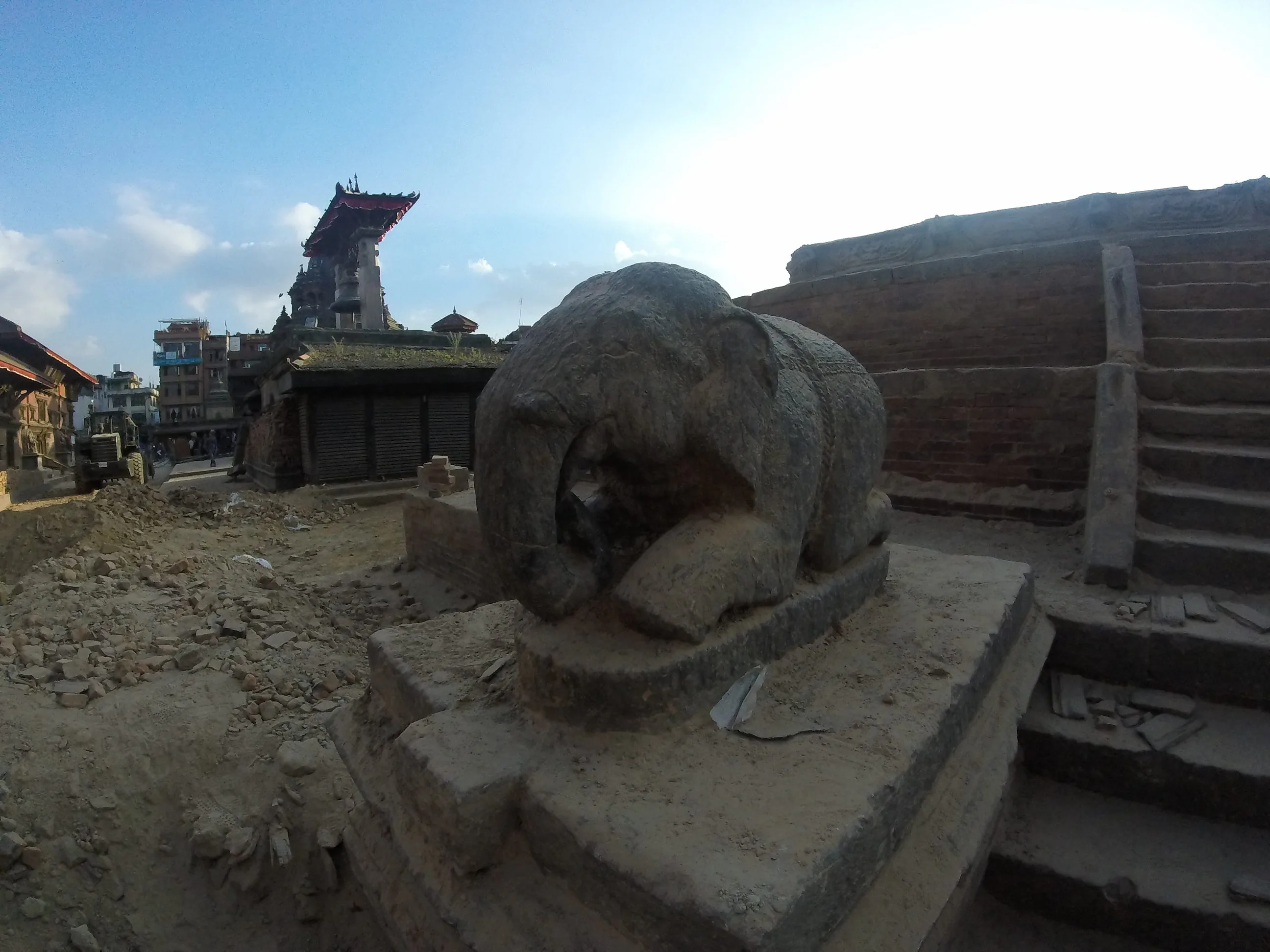
The difference between Kathmandu’s Basantapur Durbar Square and Patan Durbar Square is the impact that the loss of temples will have on the livelihood of the people who live around it.
There are several opportunities to make money around Kathmandu Durbar Square, but not here in Patan. This part of the city is known for it’s temples, and relies heavily (nearly exclusively) on tourism.
I don’t know if this is the end of Patan. It probably isn’t. Over the past couple weeks I’ve seen remarkable tenacity and resourcefulness across Nepal. And I believe that Nepal and it’s cultural sites will endure this test.
But for now, Gopi is wondering whether he can keep his shop open in Patan. He’s considering whether he may need to move to another tourist city, possibly in India, like Varanasi.
Do you want to support Gopi?
His shop is between the Golden Temple and the Baglamukhi Temple.
Here’s how you can find Gopi’s shop in Patan:
Google Maps — link
Coordinates — 27.676042, 85.325431
Phone number : +97 981 301 .4525