Why is Photography Licensing So Broken? (And 10 Ideas To Fix It!)
A twitter conversation with Naina earlier today spurred some ideas that I wanted to jot down and think through. I’m thinking and writing out loud here and I’d love to hear your thoughts and ideas too — whether you think I’m completely wrong or if you want to elaborate on some of the ideas here — leave a comment below or send me a tweet.
Why is photo licensing so broken on the internet and offline? What can we do to fix it? But before we jump into photo licensing, let’s talk about the music and movie industries because they’ve made serious progress in fixing piracy and other intellectual property theft issues there!
The Music Industry!
The music business has come a long way from the days of Napster, Kazaa and CDs with 1000’s of MP3 files being sold on street corners. Now sure piracy isn’t dead but it’s plummeted in just the last few years because of a couple reasons — mostly because people have a reasonable legal alternative now and partly because music labels have a big stick. Long story short, now we have iTunes, Spotify, Hype Machine, Sound Cloud, YouTube and more. These are all legal alternates to downloading music that make sense to most people. Now if someone uploads a music video to YouTube or even just the audio — the music labels have the means to easily either mute that video or bring down the video altogether with a DMCA/copyright letter. For example: TIDAL does this pretty aggressively, although they’re not the only ones. I haven’t heard the majority of Kanye’s new records because they’re only on TIDAL, and I’ve yet to see them on YouTube.
Side note: Did you hear how stringent NBC was to anyone who wanted to rebroadcast even a tiny snippet of the Olympics? Geez. #FUNBC
Whether it’s the Olympics or music or anything else, when the legal channels become completely unrealistic, then alternatives emerge from the woodwork. Reddit users shared this tip during the Olympics when NBC would bring down a video that a user uploads of an Olympic event. Reddit users say — If you see a YouTube video that’s “not available in your region” or a link that’s been taken down — you can change “youtube” to “youpak” in the URL and you’ll be able to watch that video. Let me know if it works. NBC’s overly-sensationalized broadcast and their absurd rules is a really broken way to enjoy the Olympics. BBC in the UK, on the other hand, reportedly did a fantastic job covering the Olympics.
The Movie Industry!
It’s come a long long way too. Movie theaters are convenient. Netflix, Hulu and HBO GO have disrupted and dominated the traditional businesses like Blockbuster by providing an easier, cheaper, and legal alternative to piracy which previously included but was not limited to torrents, streaming, DVDs on street corners. Netflix and co are winning.
But it’s not only because it’s legal and convenient, most people don’t want to access software/music/movies though pirated means. They just don’t want to. The data proves that. When you have Netflix, Hulu, YouTube, iTunes and the good old $1/night red box, why would anyone go through the trouble of navigating shady websites to pirate movies? All legal alternatives are much simpler than the pirated one. Plus, you can sleep well at night knowing that the money you spend is going to the right people — artists, movie studios, etc — and supporting to sustain that industry.
Not in India though: It’s frustrating living in Delhi because the overall market for hollywood movies in tiny compared to Bollywood flicks. That means movie theaters show a disproportionate number of Bollywood movies and have surprisingly few showtimes of even mainstream Hollywood movies. Well, the local market dictates that, I get it, but it’s still annoying. Btw is it any surprise that there’s a thriving market for bootleg DVDs of English movies here in India? The Bollywood movie industry also has a pretty large stick. They can collectively work with ISPs to block websites or take down videos entirely from hosting platforms. All things considered — it’s all a good thing although that stick needs to be regulated by some government agency to prevent abuse. There are positive steps, Netflix recently officially entered the India market (although people were already paying for the US-version and accessing it via simple VPNs.) The market is like a river — it just finds the easiest way through. The best case scenario is when the legal option is the easiest one. Thanks Netflix! But I did have to cancel my subscription because I wasn’t getting any work done. I’m looking at you House of Cards, Scandal, Luther and countless movies. :)
Now let’s talk about photo licensing!
All rights reserved? Copyright? Creative Commons? and a plethora of other licenses exist. But does it mean, how is it enforced, how do I get a “license” for my photo, etc… It’s such a mess. There are few answers in this world. How do we know whether I can post a photo on my instagram legally used or not — or on my website, blog, tweet? If I see a photo on another website, is that being used legally?
Currently, these are some things we see in the wild -
-
Watermarks — that’s obviously broken, but kinda works. Naina example. Watermarks vary from elegant (like Naina’s) to absurd (covering the whole photo.) It doesn’t deter from using the image, and it’s easily smudged, cropped away. This really isn’t a long term answer.
-
Google Images — It’s a licensing nightmare. The photos aren’t tagged with their license properly. A generic message “this image may be copyrighted” often appears under the photos. Yuck.
-
Captions on photos — “Photo credit: Photographer Name”. That’s an absurd way of tracking and crediting people for their work. It’s just free-form text. It’s better than nothing, but I find this to be wholly inadequate. And is it ever legally enough to say “Photo credit: Naina” or “Photo credit: Reuters” and use any photo you want? Obviously not.
-
Unsplash.com is my go to website for awesome license-free photos, including the one above. The license is called “Creative Commons Zero” meaning you can use the photos however you like, including for commercial purposes, without any attribution. I use it religiously and recommend them to everyone. But how do I really know that one or two photos haven’t accidentally slipped through their checks and is actually copyright? I don’t.
-
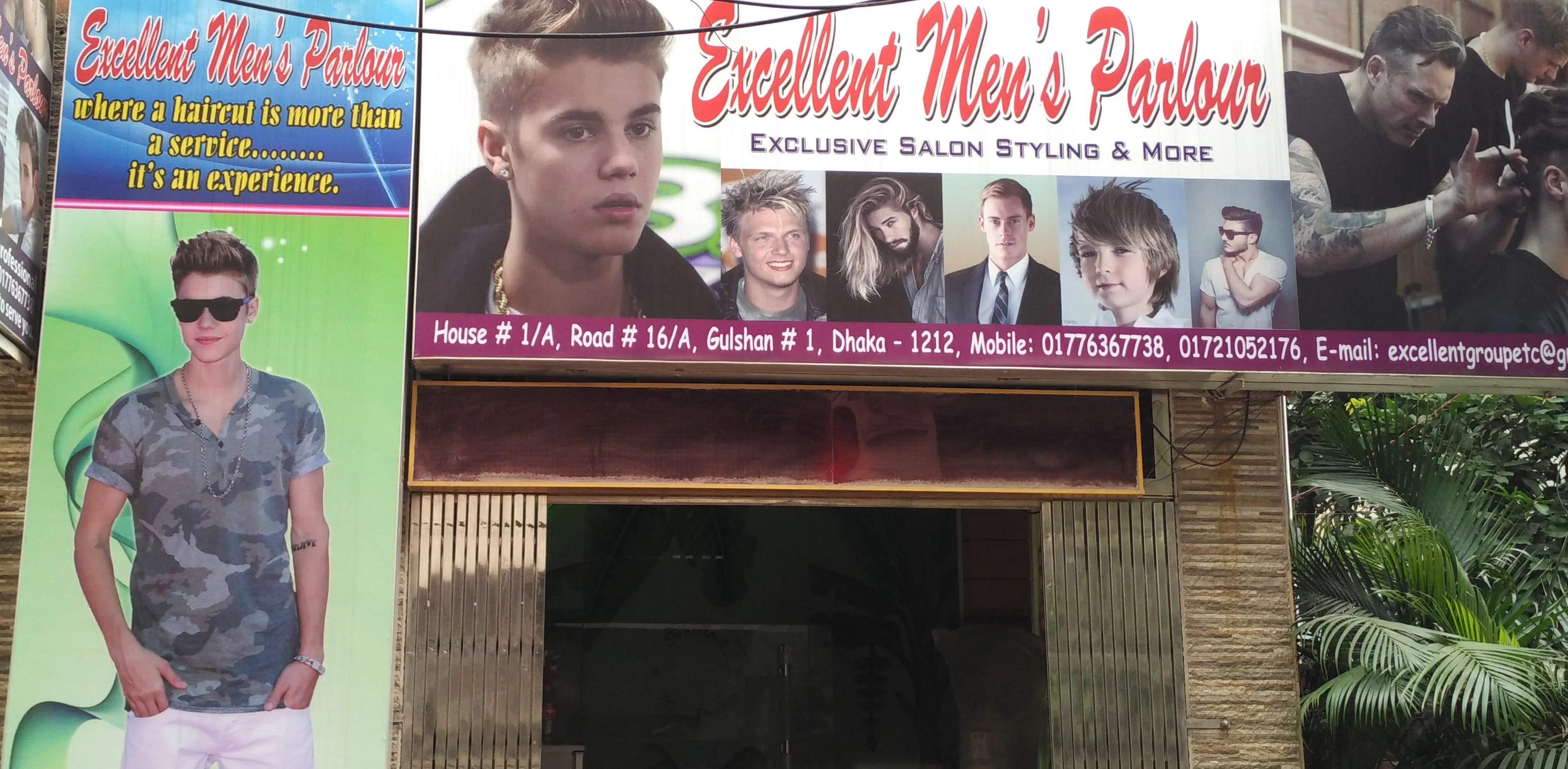
Where’s the license? If you see a photo on a website, google images, a tweet, a poster stuck to a tree, or a barber shop, there is no way for you to check whether it’s being used legitimately or not. Is there?
-
PhotoDune — I could buy an image from PhotoDune, but when I use it somewhere it’s still an honor code whether I use it “only once” or “not for commercial purposes.” The honor code system for photo licensing is broken too.
-
Offline licensing — If you’ve walked around any city in a developing country, you’ve likely walked past a grocery store or a barber shop that has photos of celebrities on their storefront.
-
Public domain — When is a photo considered to be in the public domain? Photo of Heads of State? Photos of celebrities? Photos of breaking news stories in a tweet? President Obama? Modi? Harambe? Memes? I don’t know.
-
Instagram — I am sure that Instagram has made photo licensing enforcement so much worse. There are several million instagram accounts by travel bloggers — and the vast majority of those photos are just taken from another instagram accounts. Instagram probably legally states that you must have have the rights for the photos you post, but that isn’t enforced at all. They have no incentive to do so.
-
Reddit co-founder Alexis Ohanian mentioned it in his talk about Mr. Splashy Pants that he loves it when people used, modified and shared the reddit logo. It would be crazy to file lawsuits and cease and desist orders to their most passionates fans. However, technically, they could still claim ownership over all those creations someday. Even in the best case scenario, reddit is an exception which doesn’t mind you tweaking it’s alien logo to spread the gospel of reddit.
-
The list of reasons for how and why photo licensing is broken goes on and on… I’m not a professional photographer so I bet there are many issues that I’m completely unaware of.
Caution: Incentives matter!
The vast majority of tech companies make money from selling ads and want to maximize the amount of time users spend on their website. This includes Instagram and Facebook. Facebook knowingly allows content stolen from YouTube to thrive on it’s website’s native video product. Facebook is almost as bad at enforcing video copyright, as Twitter is at handling abuse reports or customer support. Here’s an entertaining video carefully explaining the Facebook-YouTube conundrum in an entertaining video. If Facebook wanted to, they could easily squash the piracy of ripped YouTube videos on it’s platform — but it makes dollars and sense for them to turn a blind eye to it.
In Google We Trust?
Photo licensing is a big problem and it fits under Google’s umbrella. Their mission to catalog the world’s information and the “don’t be evil” motto seem like the right fit. More than likely they will acquire a company that makes headway into solving this problem.
Personal story: 8am and 5pm twitter bots.
I’m confident that photo licensing will largely be solved in the next decade. But it’s already 2016 — why is it still so difficult to find out whether I can use a photo or not?
While watching the sunset on the beach in Flic en Flac, I realized that every single second the sun is rising and setting somewhere. I was fascinated by that thought. I walked back to my airbnb and sketched the idea for Twitter bots 8am and 5pm that would keep track of timezones across the world and send a tweet about a random city in that timezone where the clock just struck 8am/5pm, with a photo from Google Images and a link to Google Maps.
Archived embed
8 or 9am somewhere on Twitter
My bots talk to the Google Images API and ask for images that are free to be used without attribution. But every now and then, google still sends my bots photos that are clearly watermarked with photographer’s logos. This is a big problem. I want to only use images with licenses where I am allowed to share without attribution, but it’s not so easy.
*puts thinking cap on*
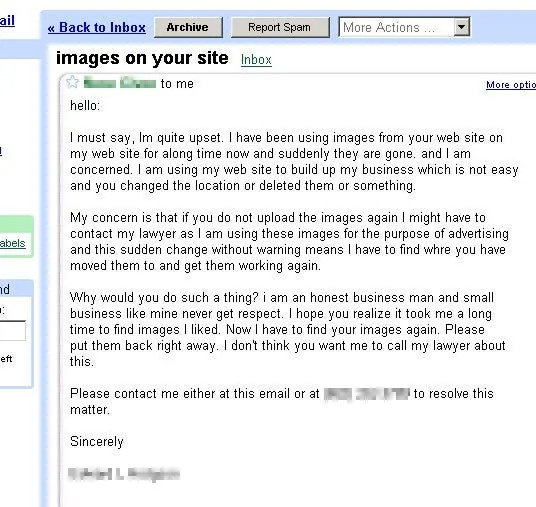
The photographer’s struggle is that it’s impossible to know where your photos have been used without your consent. It’s time-consuming and expensive to use lawyers for every cease-and-desist letter without much guarantee for success and no long term solution.
Archived embed
Naina on Twitter
Follow Naina on Twitter and enjoy her work at http://naina.co/
Whatever the solution will be. It needs to be largely automated, so the photographer doesn’t have to manually prowl the internet to find for copyright infringements. I wonder if browsers or image hosting platforms could run the software that knows whether a photo has been properly licensed or not.
Let’s take a swipe at fixing this challenge.
10 Ideas To Fix Photo Licensing!
Idea #1: How to solve it for just one photographer?
1) Database of all of Naina’s photo stored on a secure server.
2) Chrome extension that looks at every single photo you browse and automatically compares it to the Naina database — with AI in-case the photo has been manipulated somehow.
3) If it notices any of Naina’s photos online — it notifies Naina, and marks that website as spammy and remove that photo.
4) If a website has enough strikes against it, then it’s penalized on a browser-level maybe? SERP ranking? SEO penalty? Legally?
5) The problem with this is that it’s not a mobile-friendly solution. Do mobile browsers even have extensions or add-ons? And even on desktop — this will only be marginally effective if many people haven’t downloaded that chrome extension. I’d rate this idea a 1 out of 5 stars.
Idea 2: Watermarks?
1) Naina watermarks all her photo with her (N) logo.
2) Chrome extension that notifies Naina if it detects that logo on any photo.
3) Same problems as idea above. Plus, watermarks can be smudged or cropped. I rate this ideas a 1 out of 5 stars.
Idea 3: The Scraping model?
1) Build a scraper similar to import.io or KimonoLabs that scrapes every photo on a particular domain or URL path.
2) Then, on a cloud server processes whether any photo matches the database of licensed photos. But how would even that know if it’s properly licensed or not?
3) This would be effective if you’re suspicious of a website using your photos without attribution or without a license.
4) Photo can be marked “good” with a digital signature that they’re being used with the adequate licenses.
5) This idea is better because you’re in control of which domains you run the scraper on. I’d rate it a 2.5 out of 5.
Idea 4: Cease and Desist as a Service? CDAAS?
1) A completely free software tool that any photographer can use to send cease and desist letter to websites, without any out-of-pocket no lawyer fees.
2) If you win any $ from the suit — you pay the startup 20%.
3) If your photo gets taken down — you can give the law firm bot a donation that helps keep it sustainable.
4) If you file a wrongful cease and desist with it, you get charged $1,000 by the startup and any further legal ramifications lie solely with you.
5) This sounds like a promising idea! We’re onto something here folks.
6) And, this could be a monthly recurring service where the software keeps an eye out for only your photos on the internet and auto sends cease and desist letters for you.
7) I’m not a lawyer. I’m just brainstorming out loud. Have you heard of the lawyer chatbot that got people out of parking tickets in London and Gotham?
Idea #5: Solution at the hosting platform level?
Many people host websites on platforms like Wordpress, MovableType (sorry 2004 called), SquareSpace — and they auto scan every photo that’s uploaded on their platform through a anti-photo piracy software?
Idea #6: Facial recognition + Artificial Intelligence.
Facial recognition software at Facebook can now identify people in a photo or a live video feed within a fraction of a second. If there was a database of all the copyright and “all rights reserved” photos, why can’t a piece of software detect if any of these photos appear anywhere else on the internet, or even just on instagram, or a particular domain. Over time, it can learn from it’s false positives and false negatives and continuously get better. Relative to the other ideas, this one seems like a project that a small team can accomplish in 54 hours at a Startup Weekend competition. I can already sense Jason pulling out his checkbook to write the first 25k check!
Idea #7: There’s a bot for that!
Imagine a chatbot that you could send a photo or a URL of photo to and it tells you whether there copyright or not. This
Idea #8: The power of the people!
Crowdsource! Similar to the Duolingo model which is half software and half crowdsourced. A website or blog can be treated similar to how an email server is treated by the CAN-SPAM laws. If enough people mark your email as spam, you get penalized. Similarly, if enough people mention that this website uses unlicensed photos then it too can be penalized in SERP ranking.
Idea #9: What about offline though?
I think the answer lies on the intersection of Artificial Intelligence and Augmented Reality. Google and a bunch of other companies have AI powerful enough to detect where in the world a photo was taken, the identities of the people in that photo, and much more. Now imagine if you’re wearing AR-enabled glasses, shades or contact lenses — and you are able to instantly see who took any photo you come across, along with licensing information.
Idea #10: Let’s bring it all together!
1. You need a database of all your licensed photos.
2. Software scrapes a domain or list of domains and analyzes the photos on there. If a photo on xyz.com looks like one of the photos in the database. (In an ideal world, it would be possible to digitally assign a license signature to a photo, so we’d know if it’s being using legally without the honor code.)
3. Software auto creates 3 hits on Mechanical Turk. 3 real human beings look at the 2 photos and answer whether they are the same or not. If 3 out of 3 say YES, then you can be very confident that it is. If 1 or 2 out of 3 say YES, then the photographer themselves will have to verify it too. If 0 of 3 people says NO — these are different photos, then it’s ignored.
4. Now either the software+human or software+human+you have confirmed that it is in fact your photo.
5. Software calls the CDAAS (cease and desist as a service) API that automatically sends a cease and desist letter to the owner of the offending website, along with a copy to that website’s hosting provider and you (the photographer) too. “If you can’t afford a laywer, a bot will be appointed to you.”
6. Software logs one strike against this website, similar to CAN-SPAM.
7. Photo gets taken down — you put a few dollars in the CDAAS tip jar.
8. CDAAS can be a great source of very targeted leads for a lawyer should the photographer want to pursue more options or get in-person (or skype) legal advice.
Congratulations to anyone who made it all the way to the bottom of this wall of text.
Hi, I’m Amrit. Software Engineer turned Journalist turned Entrepreneur! I run Smokey — a chatbot-only business that makes air quality data as easy to access and understand as weather data. Did you know that 6.5 million people die every year because of air pollution? That’s almost 18,000 daily!
Do you know the air quality in your city right now? Ask Smokey.
Medium says this post will take 13 minutes to read. In that time, approximately 161 people will have died because of air pollution.